

What the AI Act Means for Your B2B Webshop
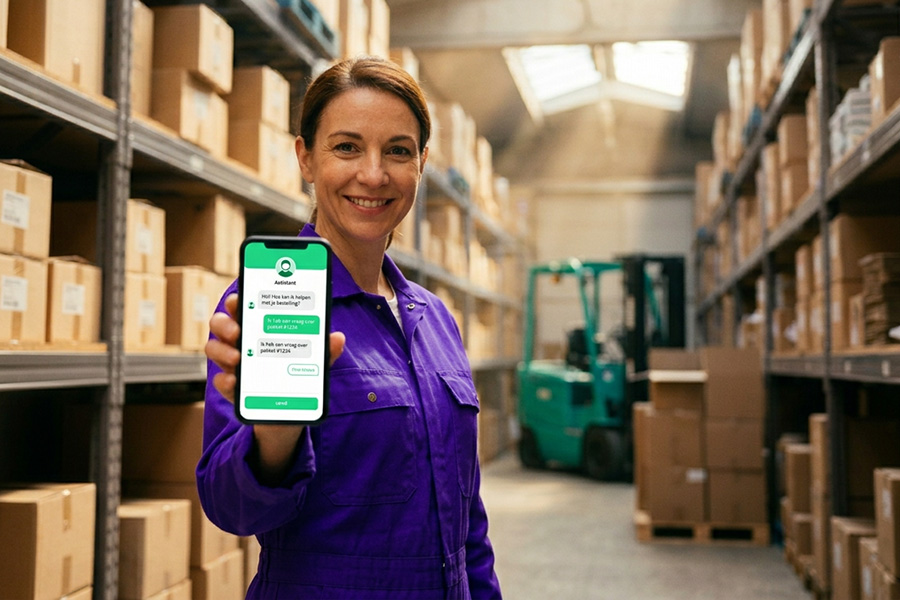
Since August 2, 2026, the first layer of the European AI Act applies. For most SMEs, that comes down to three things: let people know when they're talking to an AI system, make sure your team understands what those tools can and can't do, and check that you're not using anything that's banned. For now, that's it.
Mostly, it shows that lawmakers now assume nearly every business works with AI in some form.
The short version
- The law sorts AI by risk: banned, high, limited, and minimal.
- Most AI that SMEs use today, like product recommendations or data enrichment, falls under limited or minimal risk.
- Since August 2, 2026, you need to disclose when a customer is talking to a chatbot or other AI system.
- The strictest rules, for the highest-risk AI, have been pushed back to December 2027 and August 2028.
- Smaller businesses get lower fines and, on several points, lighter requirements than large companies.
What the law actually covers
The AI Act sets rules for how businesses can use AI. The basic idea: the bigger the risk to people, the stricter the rules. Social scoring, or AI that manipulates vulnerable people, is banned outright. AI that screens résumés or assesses loan applications falls under strict requirements. A chatbot on your website falls under a simple disclosure rule: say that it's AI. Spam filters or automatic product recommendations fall almost entirely outside the law, because the risk there is low.
Most AI in a B2B webshop, think product data that fills itself in or recommendations based on order history, sits in those last two categories.
What this means for your business
In practice: know which AI tools your business uses, tell customers when they're dealing with AI, and check that nothing you use is banned. Smaller businesses also get lower fines and, on several points, lighter rules than large companies.
Anyone still wondering whether AI is worth it for their business is asking the wrong question. Customers now expect a webshop to know their order history, show accurate product data, and answer quickly. That's getting harder to pull off without AI. The real question is how to bring it in without ending up with a pile of disconnected experiments.
Five questions for a business owner
- Which AI tools does your business already use, including ones employees started using on their own without asking?
- Does your team know what an AI tool can and can't do with customer data?
- Do you tell customers when they're talking to a chatbot or other AI system?
- Is that AI part of one platform you can actually oversee, or spread across ten separate subscriptions?
- Are you already using AI to serve customers better, or watching competitors do it?
Not sure about question four or five? That's usually where there's the most to gain.
Why the right platform makes this easier
AI that lives inside one platform is easier to keep track of than AI scattered across spreadsheets and separate tools. At Fonda, AI already helps when product data comes in. New products get filled in and checked automatically, so your catalog stays accurate without someone reviewing everything by hand.
Frequently asked questions
Does the AI Act apply to small businesses too?
Yes. The law applies to nearly every business that uses AI, including small ones. Smaller businesses do get lower fines and, on several points, lighter requirements than large companies.
By when do I need to do something?
The disclosure rule for things like chatbots has applied since August 2, 2026. The strictest rules, for the highest-risk AI, only kick in from December 2027 or August 2028, depending on the type of application.
I use AI through a supplier, not something I built myself. Am I still responsible?
Yes. You're still responsible for knowing which AI you use and whether it's used fairly toward your customers. A supplier that already accounts for this saves you a lot of work.
Do I need to act right now?
The most useful step is mapping out which AI your business already uses and explaining to your team what it can and can't do. That's also the best preparation for stricter rules down the line.
Is using AI risky given this law?
Not if it's for things like product recommendations or data enrichment. Those are exactly the categories the law is least strict about.
This article offers general guidance, not legal advice. For an assessment of your specific situation, consult a specialist in AI regulation.
See how Fonda already uses AI safely
Wondering how to use AI responsibly in your webshop, customer portal or product management? At Fonda, that's already built in.
Start with the basics.
Build from there.
Fonda Basic is free and immediately gives you a central place for all your product data and digital assets. You can take the step to a complete B2B webshop with customer-specific prices when you are ready.
Specifically built for B2B SMEs with 20–300 employees · Support based in Ghent