

The Digital Product Passport is coming

From 2027, the Digital Product Passport (DPP) will be mandatory for a growing number of products on the European market. This still seems a long way off — but it is a reality that manufacturers and wholesalers should respond to today.
What exactly is the DPP?
The DPP is a digital passport that standardized information contains about a product, such as:
- Longevity and durability
- Material composition and origin
- Energy consumption and CO₂ footprint
- Recyclability and reusability
This information is linked to a unique product identifier (such as a GS1 GTIN) and unlocked via a QR code or other 2D code. The data must be authentic, verifiable and accessible throughout the life of the product.
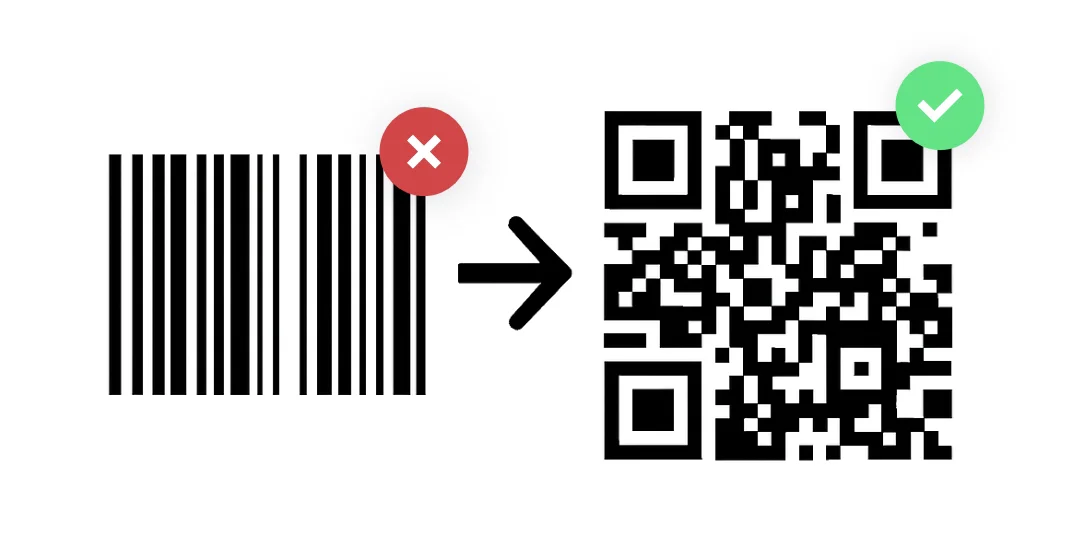
GS1 is working on the so-called Sunrise 2027 transition, where retail scanners will be able to read 2D codes (such as QR and DataMatrix) at the checkout. This is an evolution in the GS1 standard, apart from the DPP regulations. The classic barcode won't disappear overnight — both systems will co-exist for a while.
Why is the DPP important?
The DPP is a key element of the Ecodesign for Sustainable Products Regulation (ESPR), part of the wider EU Green Deal. The ambition? Achieve a fully circular economy by 2050.
The rollout is phased by product category. Below is an overview based on the current ESPR schedule:
What does this mean for you as a manufacturer or wholesaler?
- Compliance is mandatory. Without DPP, your product will soon no longer appear on the EU market.
- Transparency is becoming the norm. Customers, authorities and partners expect insight into sustainability and origin.
- New business models are emerging. Think of product-as-a-service, return logistics and circular sales strategies.
- Digital visibility is rising. A fully developed DPP makes your product easier to find and comparable on digital trading platforms.
What does the DPP mean for the end user?
The DPP gives consumers transparent, reliable and accessible information about the products they buy. Think about:
- Where did this product come from?
- How sustainably is it produced?
- What materials are in it?
- Can I recycle it or have it repaired?
- What is the environmental footprint?
This information helps consumers to more conscious choices to be made, based on facts rather than marketing claims.
How will end users use the DPP?
- Scan the QR code on the product or packaging
Consumers can scan the QR code linked to the DPP via a smartphone. - View mobile-friendly product page
They will see a clear page with all relevant information about the product: from origin to recyclability. - Using Information in Purchasing Decisions
Consumers can compare products based on sustainability, longevity and environmental impact. - Reuse or recycling support
The DPP also includes information about maintenance, repairs and proper processing.
Why is the DPP important to consumers?
- More control and trust: You know what you're buying and where it comes from.
- More sustainable choices: You can opt for products with a lower impact on people and the planet.
- Better after-purchase service: Think of maintenance instructions, warranty information and repair parts.
- Less greenwashing: The information in the DPP is standardized and verifiable — no more vague claims.
Why a PIM system is essential at DPP
One Product Information Management (PIM)system is the backbone of a successful DPP strategy. Why?
- Central source of truth: you manage all your product data in one place.
- Efficiency and scalability: you publish quickly and consistently to various channels, including DPP platforms.
- Data quality and structure: a PIM helps you enrich, validate and structure data according to the required DPP standards such as GS1 Digital Link, EPCIS, and JSON-LD.
- Connection with QR codes and GTINs: PIM systems integrate easily with GS1 standards and digital links.
Without PIM, managing DPPs quickly becomes a time-consuming and error-prone task.
Why take action now?
- The technical requirements are complex. Think of data standards, QR integration and links to your existing systems.
- The preparation time is long. Collecting, structuring and integrating data takes months of work.
- The first deadline is fixed. The battery passport will be mandatory from February 18, 2027 — and that date is not indicative but determined by law.
- The competition has already started. Those who invest now are building an advantage in sustainability and operational efficiency.
The DPP is not an administrative burden, but an opportunity to innovate, become more sustainable and grow. The first hard deadline — the battery passport on February 18, 2027 — shows that this is no longer a vague vision of the future. Don't wait until 2027. Start getting your PIM in order today.
What can you do today?
- Map your product data. Where is she sitting? In what format? Who manages them?
- Call on a digital partner, such as Fonda. It is necessary to follow the regulations closely as they continue to be rolled out.
- Deploy or optimize your PIM system. PIM is part of the Fonda Core module.
Are you ready for the Digital Product Passport?
Our free report includes a five-question self-assessment. One question covers exactly this, and your score tells you how much work is left. The report is in Dutch.
Start with the basics.
Build from there.
Fonda Basic is free and immediately gives you a central place for all your product data and digital assets. You can take the step to a complete B2B webshop with customer-specific prices when you are ready.
Specifically built for B2B SMEs with 20–300 employees · Support based in Ghent